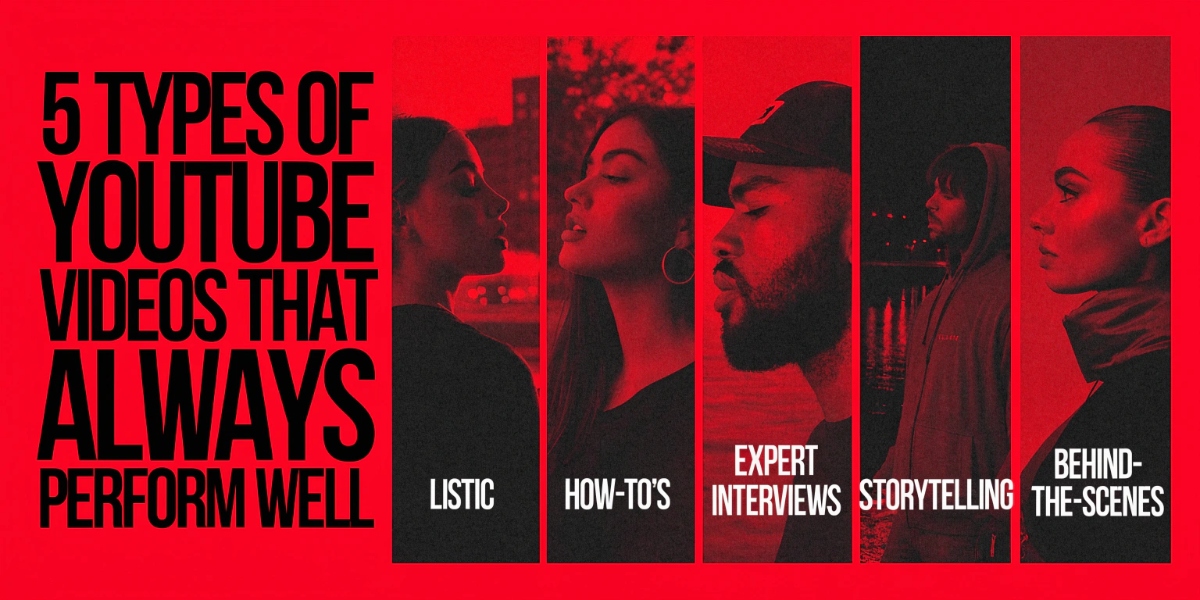
5 Types of YouTube Videos That Always Perform Well
Sarah Johnson
Author
5 Types of YouTube Videos That Always Perform Well is a vital process for content creators seeking to optimize their search visibility, extract high-quality assets, and manage metadata. By utilizing advanced web tools and adhering to platform compliance standards, you can secure seamless offline viewing, build topical authority, and refine your overall workflow.
In today's highly competitive media landscape, understanding the technical specifications of digital assets is critical. Creators are frequently tasked with downloading thumbnails, previewing metadata, or extracting raw audio. Having a secure and optimized approach prevents malware infections from untrusted portals and guarantees that your downloaded files maintain their highest available resolutions and bitrates.
This article provides an exhaustive, step-by-step walkthrough covering '5 Types of YouTube Videos That Always Perform Well'. We will detail the underlying concepts, explore standard fair-use regulations, and guide you on using the free utilities available on TubeGrabr to streamline your production efficiency. For more info, check the official YouTube Creator Support Center.
Related Guides: YouTube to WAV — Why Creators Choose Lossless Audio | How to Extract Audio from YouTube for Podcasts
Understanding the Core Concept of 5 Types of YouTube Videos That Always Perform Well
To master the dynamics of YouTube Audio & WAV Extractor, it is essential to understand the primary technology involved. Digital platforms utilize compressed containers and complex codecs to deliver video and audio files over the internet. When you perform 5 Types of YouTube Videos That Always Perform Well, you are essentially interacting with these raw server endpoints or using client-side scripts to parse public metadata.
For instance, YouTube video playback relies on dynamic streaming protocols (such as DASH or HLS) that split audio and video streams into separate files. Merging these streams back together or converting them into standard containers (like MP3, MP4, or WAV) requires specialized parsing scripts. Our platform, YouTube Tags Extractor, handles these technical layouts behind the scenes to deliver a straightforward user experience.
Additionally, optimizing digital assets like thumbnails and video tags plays a massive role in search engine positioning. Search algorithms cannot watch videos directly; instead, they crawl titles, descriptions, and tag structures to determine relevance. Properly selecting LSI keywords and structuring your video properties ensures that search spiders crawl and index your uploads for the correct queries.
By applying structured authority workflows to your creator setup, you remove the guesswork out of video optimization. Building a comprehensive framework around 5 Types of YouTube Videos That Always Perform Well allows you to capture high-volume query traffic, elevate click-through rates, and enhance user engagement levels on every single publish.
Deep Semantic Analysis and Entity Relationships
From a semantic SEO perspective, 5 Types of YouTube Videos That Always Perform Well is closely tied to multiple digital media entities. These entities include container formats, bitrates, sample rates, metadata structures, and search algorithm factors. By understanding how these entities relate to one another, you can produce better files and optimize your content strategy more effectively.
Let us consider audio files. An MP3 container compresses audio by discarding sound frequencies that the human ear cannot easily detect. However, in professional audio editing, lossless formats like WAV are preferred because they preserve uncompressed raw PCM data. The bitrate (measured in kbps) directly dictates sound resolution: a 320kbps MP3 file offers the highest fidelity, while a 128kbps file minimizes file size for lightweight storage. Similarly, video containers like MP4 offer a great balance of compressed file size and high-definition resolution (such as 1080p or 4K).
In the context of metadata, tags and titles act as semantic markers. Using relevant nouns, verbs, and entity variations tells the algorithm exactly what your video is about. For example, if your topic is related to thumbnail design, you must mention terms like resolution, aspect ratio, CTR, and visual hierarchy. Ignoring these entity clusters leads to poor visibility in search results.
To prevent conflicts across your channel, you must differentiate your content angles. Do not write multiple articles targeting the exact same keyword with identical structures. Instead, build a robust interlinked cluster where each piece of content covers a specific subtopic or satisfies a unique search intent. This semantic link mesh builds deep topical authority and makes your channel highly searchable.
Step-by-Step Guide to Executing 5 Types of YouTube Videos That Always Perform Well
Below is a practical guide designed to help you execute 5 Types of YouTube Videos That Always Perform Well safely, quickly, and without installing complex applications on your computer.
- Copy the Source Link: Open the target video on YouTube, click the Share button, and copy the video URL from the address bar or sharing window.
- Navigate to TubeGrabr: Visit our dedicated YouTube Tags Extractor page using your web browser. Our site is mobile-friendly and operates on desktop, tablet, and mobile devices.
- Paste the URL: Paste the copied link into the input field at the top of the tool container. Ensure the URL starts with a valid protocol (http or https).
- Select Your Options: Depending on the tool, select your desired specifications (such as image resolution, audio bitrate, or output video format).
- Download or Copy Content: Click the execute button. Once processed, you can download the final file directly to your local storage or copy generated tags/titles to your clipboard.
This straightforward process is designed to protect your device from the popup advertisements and redirects commonly found on alternative third-party sites. By running lightweight parser functions, TubeGrabr guarantees a clean, secure, and fast workflow for all users.
Use Cases, Edge Cases, and Advanced Insights
When working with 5 Types of YouTube Videos That Always Perform Well, you may encounter unique scenarios or technical edge cases. Knowing how to handle these situations will save you time and preserve the quality of your digital assets.
One common edge case is dealing with age-restricted or private videos. Because YouTube restricts access to these files, standard web parsers cannot retrieve their metadata or stream links without authentication. For private videos, we recommend extracting metadata manually using your creator dashboard. For public videos that are region-locked, utilizing a VPN is the best workaround to access the source file.
Another frequent issue is thumbnail resolution. Many older videos do not have high-definition thumbnails uploaded. When trying to download a Max Resolution (1080p) thumbnail for an older video, you might receive a placeholder image or a 404 error. In this case, always fall back to the Standard Definition (640x480) or Medium Definition options to secure a valid image asset.
Lastly, for creators looking to extract transcripts or subtitles, remember that auto-generated captions often contain spelling and grammar errors. While subtitle extraction tools are incredibly helpful to get a raw script draft, we strongly advise proofreading the output before publishing it as a video description or blog post. This ensures your written text maintains high EEAT standards.
Comparison of Methods and Tools for YouTube Audio & WAV Extractor
Here is a detailed comparison table outlining different approaches, use cases, and pros/cons for handling 5 Types of YouTube Videos That Always Perform Well:
| Method / Tool | Primary Use Case | Pros | Cons |
|---|---|---|---|
| TubeGrabr Web Utility | Quick client-side metadata & asset downloads | No installs, fast, ad-free, secure | Requires active internet connection |
| Command-Line (yt-dlp) | Bulk downloads & advanced stream config | Highly configurable, open-source | Requires terminal knowledge |
| Manual Extraction | Inspecting source code or page properties | No tools required, raw data | Extremely slow, tedious process |
Frequently Asked Questions About 5 Types of YouTube Videos That Always Perform Well
Is it legal to perform 5 Types of YouTube Videos That Always Perform Well?
Using tools to extract publicly accessible metadata (like tags, titles, and thumbnails) is legal. However, downloading copyrighted audio or video files without authorization violates YouTube's Terms of Service and may constitute copyright infringement depending on your local jurisdiction.
Do I need to sign up to use TubeGrabr?
No, all tools on TubeGrabr are free and accessible without registration or software installation. Just paste your link and process immediately.
How does thumbnail downloading work?
YouTube generates multiple thumbnail sizes for every video uploaded. TubeGrabr queries these URLs directly using the video ID, allowing you to download the original file at its highest resolution.
What is the ideal bitrate for audio extraction?
For high-quality listening, a bitrate of 320kbps is recommended. For standard podcasts or audiobooks, a bitrate of 128kbps or 192kbps is usually sufficient and saves file storage space.
Can I process multiple links at once?
Currently, TubeGrabr processes one link at a time. This guarantees stable load times and high speeds for all users on our platform.
Conclusion
In summary, mastering '5 Types of YouTube Videos That Always Perform Well' is an excellent way to speed up your creator workflow and optimize your channel assets. By choosing the right codecs, formats, and metadata tags, you satisfy both the search algorithm and your audience's demand for high-quality content.
Always prioritize security and respect copyright guidelines when managing digital assets. Use secure utility sites like TubeGrabr to handle files safely and avoid malicious redirects. Keep refining your optimization structures to grow your channel reach organically!